Source Horizontal Cryogenic Turbo Expander for Gas Separation, LNG Plant, Chemical
Compare 30 listings for the horizontal cryogenic turbo expander designed for gas separation, LNG plants, and chemical applications. Buyers can review specifications like oxygen purity, working principles, and customization options to find suitable suppliers.
Key considerations
Products List






Comprehensive Sourcing Guide
Strategic Sourcing Guide for Horizontal Cryogenic Turbo Expanders
Understanding the Technical Architecture of Horizontal Cryogenic Systems
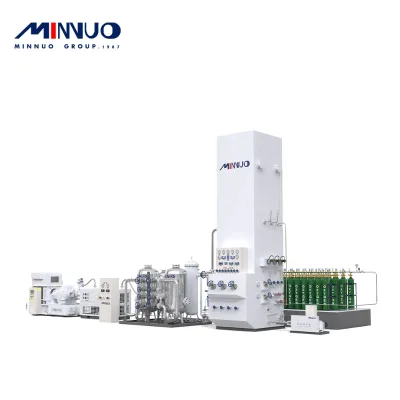
The horizontal cryogenic turbo expander represents a critical component within industrial gas separation infrastructure, specifically designed for high-efficiency air separation and gas generation applications. Unlike vertical configurations, the horizontal structure offers distinct mechanical advantages regarding maintenance accessibility and spatial integration within existing plant layouts. The core operating principle relies on condensation separation, where the expander extracts energy from a high-pressure gas stream to achieve the necessary temperature drop for liquefaction. This process is fundamental to achieving high-purity oxygen and nitrogen outputs, with specific models capable of delivering medical-grade purity levels up to 99.999%.
When evaluating the technical specifications of these units, buyers must focus on the interplay between pressure, flow rate, and power requirements. The operational envelope for these expanders typically supports an inlet pressure around 0.7 MPa, with an outer pressure range of 0.3 to 0.5 MPa. The capacity flow rate is a variable parameter that scales significantly based on the specific model and application needs, ranging from 50 to 20,000 Nm³/h. This wide variability allows the equipment to serve both small-scale chemical processing units and large-scale Air Separation Units (ASU) or Liquefied Natural Gas (LNG) plants. The power consumption is often customized to match the specific thermodynamic requirements of the facility, with voltage options spanning 220V, 380V, and 480V at frequencies of 50-60 Hz.
The physical construction of these horizontal units is robust, utilizing materials such as carbon steel, bronze, and stainless steel to withstand the extreme thermal stresses and corrosive environments inherent in cryogenic operations. The weight of a fully assembled unit can be substantial, with some configurations reaching up to 50,000 kg, necessitating careful logistical planning for site delivery. The dimensions are not merely a function of the machine size but are also dictated by the required internal clearance for the turbo machinery and the associated heat exchangers. While some listings indicate standard dimensions like 320024001600 mm, the actual size often varies based on the specific model number, such as the EC699, 801, or EC572 series, and the specific capacity flow rate required.
Compliance Framework and Certification Verification
In the B2B procurement of industrial gas equipment, certification is not merely a formality but a critical indicator of manufacturing quality and safety compliance. The horizontal cryogenic turbo expander market features products that adhere to a comprehensive suite of international and domestic standards. Buyers should verify that the supplier can provide documentation for UR, RoHS, ISO, CE, and CCC certifications. These marks indicate that the product meets specific requirements regarding electromagnetic compatibility, hazardous substance restriction, quality management systems, and safety in China and Europe.
It is essential to distinguish between the certifications applicable to the entire system versus those specific to individual components. For instance, while the core components such as the PLC and engine are critical for operation, the overall unit certification ensures that the integration of these parts meets safety standards. The presence of ISO and CE certifications suggests adherence to European safety directives and international quality management protocols. However, buyers must remain vigilant, as certification status can vary between different models and production batches. The verification process should involve requesting valid, up-to-date certificates directly from the manufacturer rather than relying on third-party summaries.
Furthermore, the standard operating procedures and safety protocols associated with these units must align with the regulatory environment of the buyer's location. The "320024001600mm" standard mentioned in product data often refers to a specific dimensional standard or packaging requirement rather than a universal safety code. Therefore, procurement teams must cross-reference the physical dimensions and material specifications with local industrial safety codes. The use of carbon steel and stainless steel implies a need for corrosion resistance verification, especially in chemical and petroleum applications where the gas composition may be aggressive. Ensuring that the material composition matches the certified specifications is a vital step in the compliance check.
Cost Drivers and Pricing Dynamics in Industrial Gas Equipment
The pricing structure for horizontal cryogenic turbo expanders is highly variable, reflecting the complexity of the engineering, the scale of the unit, and the level of customization required. The observed price range in the market spans from $1 to $1,500,000, a disparity that underscores the difference between small-scale components and large, fully integrated cryogenic systems. This wide range is not indicative of quality variance alone but rather the massive difference in capacity, material usage, and technological sophistication between a basic expander and a full-scale ASU unit.
Several key factors drive the cost of these systems. First, the capacity flow rate is a primary determinant; units capable of handling 20,000 Nm³/h will naturally command a higher price than those designed for 50 Nm³/h. Second, the material composition plays a significant role. The use of high-grade stainless steel and bronze, which are necessary for cryogenic temperatures and chemical resistance, adds to the material cost compared to standard carbon steel constructions. Third, the level of customization, which is available for these products, significantly impacts the final price. Custom voltage requirements, specific dimensions, and tailored control systems (PLC integration) all contribute to the engineering hours and manufacturing complexity.
The Minimum Order Quantity (MOQ) is another critical cost consideration. The market data indicates an MOQ range of 1 to 1000 units, with many suppliers offering an MOQ of just 1 unit. This flexibility allows smaller enterprises to procure a single horizontal expander without the need for bulk purchasing, though the unit price for a single item may be higher than the per-unit cost for a bulk order. Additionally, the packaging requirements, such as wooden boxes or wooden cases, add to the logistical costs, especially for heavy units weighing up to 50,000 kg. Buyers should also factor in the long-term operational costs, including the 10-year service life under proper maintenance, which can offset the initial capital expenditure through reduced downtime and energy efficiency.
Typical Applications and Industry Use Cases
Horizontal cryogenic turbo expanders are versatile assets deployed across a diverse range of industrial sectors, primarily driven by the need for high-purity gas separation and efficient energy recovery. The primary application fields include the petroleum, electronic, and chemical industries. In the petroleum sector, these units are utilized for gas processing and separation, ensuring the purity of gases used in refining processes. The electronic industry relies on these expanders for the production of high-purity oxygen and nitrogen, which are essential for semiconductor manufacturing and other precision processes where impurities can be catastrophic.
The chemical industry represents another major deployment area, where the expanders facilitate the separation of various gas mixtures used in synthesis and processing. The specific application of these units often extends to Air Separation Units (ASU) and Liquefied Natural Gas (LNG) plants, where the efficiency of the cryogenic process is paramount. The ability to achieve an oxygen purity of 99.999% at a medical level makes these systems indispensable for healthcare applications, although the primary industrial focus remains on large-scale gas generation. The "Purpose" of these units is explicitly defined as gas separation, highlighting their role in isolating specific components from air or other gas mixtures.
The working principle of condensation separation allows these expanders to operate effectively in environments requiring low noise levels, making them suitable for facilities with strict environmental regulations. The efficiency of the system, ranging from 75% to 100%, ensures that the energy input is maximized for gas production, reducing the overall carbon footprint of the operation. The "Usage" of these units is predominantly for oxygen generation, but the underlying technology supports the production of other gases as well. The versatility of the horizontal structure allows for easy integration into existing plant layouts, whether for new construction or retrofitting of older facilities.
Supplier Evaluation and Quality Assurance Protocols
Selecting a reliable supplier for horizontal cryogenic turbo expanders requires a rigorous evaluation process that goes beyond basic product specifications. Buyers should prioritize suppliers who demonstrate transparency in their manufacturing capabilities and provide comprehensive documentation. The "Video outgoing-inspection" feature is a valuable tool for remote verification, allowing buyers to visually inspect the product before shipment. This feature is particularly useful for large, complex units where physical inspection prior to delivery is logistically challenging.
When evaluating suppliers, the "Brand Name" and "Place of Origin" are important indicators of reputation and logistical capability. Suppliers originating from regions like Sichuan and Jiangsu, China, have established reputations in the industrial equipment sector. However, buyers must verify that the brand name, such as MINNUO, is associated with the specific model and that the origin matches the claimed manufacturing location. The "Core Components" such as the PLC and engine are critical for the unit's performance, and buyers should ensure that these components are sourced from reputable manufacturers and are compatible with the expander's design.
Quality assurance should be a central part of the supplier evaluation. The "Warranty" period, typically 1 year, provides a baseline for the supplier's confidence in their product. However, buyers should also inquire about the "Service life," which is estimated at 10 years under proper maintenance. This long-term perspective is crucial for calculating the total cost of ownership. Additionally, the "Production Rate" of 100% suggests a high level of reliability, but buyers should verify this claim through case studies or references from previous clients. The "Condition" of the product being "New" is a standard expectation, but buyers should confirm that the unit has not been refurbished or repurposed.
Long-Term Procurement and Maintenance Considerations
Procuring a horizontal cryogenic turbo expander is not a one-time transaction but the beginning of a long-term operational relationship. The "Service life" of 10 years under proper maintenance highlights the importance of a robust maintenance strategy. Buyers should establish a clear maintenance schedule that includes regular inspections of the core components, such as the PLC and engine, to ensure optimal performance. The "Customization" availability allows for tailored maintenance plans that fit the specific operational needs of the facility.
The "Single gross weight" and "Single volume" data points are critical for planning the logistics of maintenance and potential replacement. While some data may list these as 0 cm³ or 0.0 kg, this likely refers to the net weight of specific components or a data entry anomaly. Buyers must rely on the actual weight of 50,000 kg for logistical planning. The "Packing" method, whether wooden box or wooden case, must be durable enough to protect the unit during transport and storage.
Furthermore, the "Voltage" and "Power" specifications must be compatible with the facility's power grid. The ability to customize voltage (220V/380V/480V) and power (Customized) is a significant advantage, but it requires careful coordination with the facility's engineering team. The "Efficiency" of 75~100% is a key performance metric that should be monitored over time to ensure the unit continues to operate at peak performance. Any deviation from the expected efficiency could indicate a need for maintenance or component replacement.
Comparative Analysis of Key Product Attributes
To facilitate a clearer understanding of the variations in horizontal cryogenic turbo expanders, the following table summarizes the key attributes observed in the market data. This comparison helps buyers identify the specific features that align with their operational requirements.
| Attribute | Observed Range / Value | Relevance to Procurement |
|---|---|---|
| Certification | UR, RoHS, ISO, CE, CCC | Ensures compliance with international safety and quality standards. |
| Structure | Horizontal | Affects installation footprint and maintenance accessibility. |
| Working Principle | Condensation Separation | Determines the efficiency and suitability for specific gas types. |
| Oxygen Purity | 99.999% Medical Level | Critical for applications requiring high-purity gas. |
| Capacity Flow Rate | 50-20,000 Nm³/h | Defines the scale of the unit and its suitability for plant size. |
| Inlet Pressure | 0.7 MPa | Must match the facility's supply pressure. |
| Material | Carbon Steel, Bronze, Stainless Steel | Impacts durability and resistance to corrosion. |
| Warranty | 1 Year | Standard protection period for manufacturing defects. |
| Service Life | 10 Years (Proper Maintenance) | Indicates long-term value and reliability. |
| MOQ | 1 Unit | Allows for flexible purchasing without bulk commitment. |
| Origin | Sichuan, Jiangsu, China | Influences logistics and potential trade barriers. |
| Voltage | 220v/380v/480v/50-60hz | Must be compatible with local power infrastructure. |
This comparative analysis underscores the importance of matching specific technical attributes to the buyer's unique operational context. The horizontal cryogenic turbo expander is a highly specialized piece of equipment, and successful procurement depends on a thorough understanding of these variables. By carefully evaluating the technical specifications, compliance status, cost drivers, and supplier capabilities, buyers can make informed decisions that ensure the long-term success of their gas separation operations.
FAQs
What certifications do horizontal cryogenic turbo expanders typically have?
These units typically carry UR, RoHS, ISO, CE, and CCC certifications. Buyers should verify that the specific model matches the required safety and quality standards for their region before procurement.
Can I customize the voltage and dimensions for this equipment?
Yes, customization is available for voltage and dimensions to match specific site requirements. Options include 220V, 380V, or 480V at 50-60 Hz, with dimensions varying based on the model and capacity flow needs.
How much oxygen purity can these horizontal expanders achieve?
These systems can achieve oxygen purity levels up to 99.999% at medical grade. This high purity makes them suitable for critical applications in the electronic and chemical industries requiring strict gas quality.
What is the typical service life of a horizontal cryogenic turbo expander?
The service life is estimated at 10 years under proper maintenance conditions. This longevity is supported by robust materials like carbon steel and stainless steel designed to withstand extreme thermal stresses.
Which industries primarily use horizontal cryogenic turbo expanders?
Primary application fields include petroleum, electronic, and chemical industries. These units are also essential for Air Separation Units and Liquefied Natural Gas plants requiring efficient gas separation and energy recovery.
What is the minimum order quantity for these expanders?
The minimum order quantity can be as low as 1 unit for single item purchases. However, bulk orders may vary, with observed MOQ ranges extending up to 1000 units depending on the supplier.